


How the wild Oaks of Normandy graced the floors of Scotland’s World famous distillery.
How did a French tree like this end up on the floor of the world’s most famous Scotch Whisky distillery? This is a mature Oak tree growing wild amongst the fields (bocage) of Normandy. But it’s not any old Oak, there are many subtle differences between this tree and its French and English relations. Like ‘Grande Cru” wine, the character is derived from the ‘Terroir’, heritage and method of production. It also benefits from being wild. Set apart from man-made plantations where there is scarce room for the tree to catch the sunlight it needs, or get as much nourishment and hydration from the ground. This particular Oak grows freely in beauty and strength. It has it all.
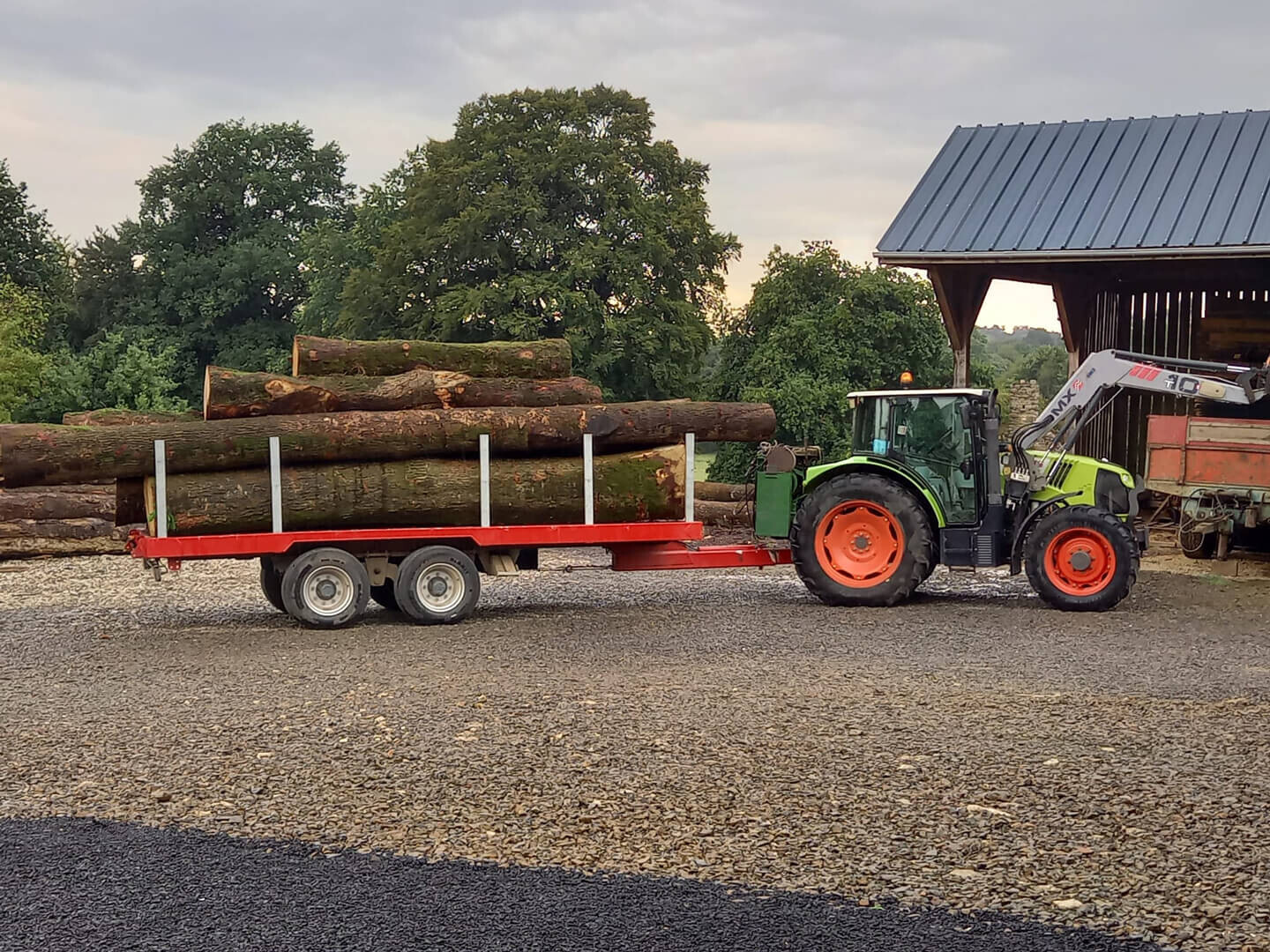
Trunk load. The Wild Oak Trees arrive at the traditional sawmill which, after processing, will cut and finished into boards and parquet blocks.
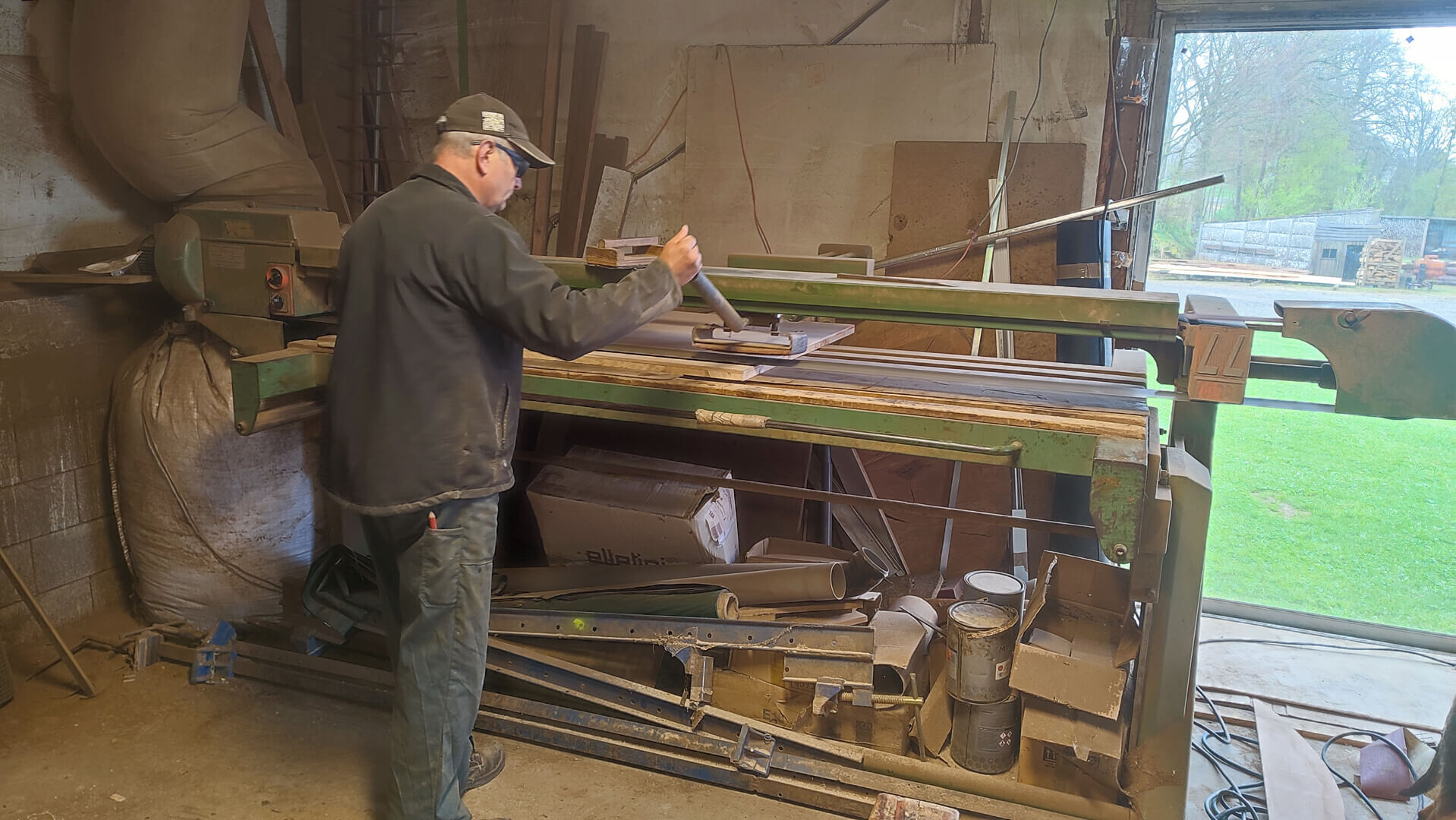
Shed load. Vincent oversees the whole process, from tree to plank ensuring consistency of quality and depth of colour.
Artisan craftsmanship
The wild Oaks of Normandy are specially selected and felled with the assent of the owner. Then taken to a traditional sawmill where it is cut into planks, air-dried for three months, ammonia treated for a rich colour then another month of air-drying before being cut into boards and parquet blocks. The process has the unhurried pace of serenity.
This is traditional craftsmanship. It’s about as far removed from mass production as it can be. The Wild Oak is available in its natural colour or treated to give it an aged look that mimics that unique beauty of Reclaimed Oak.
Enduring heritage
Reclaimed Oak is not to every taste, but it does complement the heritage of distinguished buildings – Stately homes, classic manor houses and rose-fronted cottages. Handsome though Reclaimed Oak can be, the supply is naturally limited by availability, and it is hard to maintain a consistent level of quality. Wild Oak from Normandy is an excellent economic alternative; it is more plentiful, it costs less, wears as well (if not longer, Reclaimed has already had half a life!), and naturally replenishes itself without Man’s interference.

See for yourself. No picture, nor a thousand words, can substitute holding of a sample in your hand. Visit our Battersea Showroom and find out for yourself. Make an appointment: 020 3793 8915 or 020 3793 0389.
The whisky connection
In 2024, we had a call from an interior designer with whom we had worked a couple of years back; she invited us to quote for some new floors in a Scottish whisky distillery of world-wide renown. Scotland is not really our patch of operations, but here was a request we couldn’t refuse.
It is in the culture of whisky distillers to respect the passage of time. Questions and answers swung back and forth with the deliberation of a great pendulum until, a year later, Dan Moss from Wood Be Beautiful came to see us with samples of Wild Oak from Normandy. We were smitten, loved the depth of colour and realised this was exactly right for the distillery. So, we put in our bid accompanied by the samples from Wood Be Beautiful.

Preparation is all. The underfloor is the essential foundation for a Wild Oak floor to last a lifetime.

Perfect reflection. The new floor perfectly reflects the dignity of this centuries old building.
Delighted
After some months, we were awarded the project; it was the Wild Normandy Oak that settled it, but perhaps our reputation had something to do with it, too. When the floor was finished, we stood back and admired the way the Wild Oak reflected the integrity of the building’s ancient heritage. The client was delighted. You’ll have to guess the name; we are not at liberty tell you!
Parallels
Whilst Wood Be Beautiful is as niche as the distillery’s fame is worldwide, there are many parallels which may have played a part in coming to a decision: the importance of locality, craftsmanship, and patience – factors that matter as much to whisky distilling as to the fine floors that come from Normandy’s Wild Oaks.