


Floor sanding and floor restoration are closely related, but they are not the same service. Floor sanding removes an old finish and a thin layer of timber to renew a worn surface, while floor restoration is a broader process that can include repairs, sanding, gap filling, refinishing and other work needed to bring a damaged wooden floor back to life.
If your hardwood floors are structurally sound but scratched, discoloured or worn, professional floor sanding may be enough. If there are loose boards, damaged parquet blocks, deep gouges, previous repairs or structural movement, a more complete wood floor restoration is usually required.
Knowing the difference can help you avoid unnecessary work and protect existing flooring that may still have decades of useful life remaining.
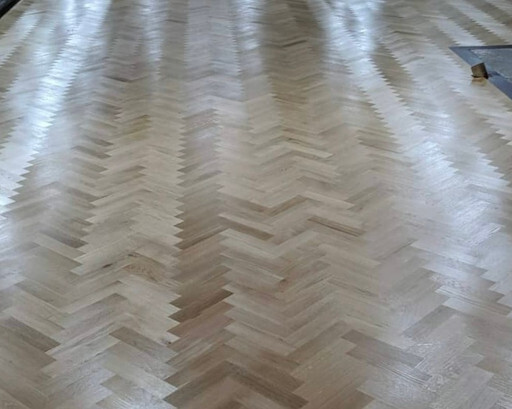
What Is the Difference Between Floor Sanding and Floor Restoration?
Floor sanding is primarily a surface treatment, whereas floor restoration addresses the wider condition of the floor. Sanding removes worn coatings, scratches and a very thin top layer of wood. Restoration looks at the complete floor and may involve repairing boards, stabilising loose sections, filling gaps, sanding and applying a new protective coating.
Professional floor sanding is suitable when the timber beneath the existing finish remains in good condition. The sanding process exposes clean wood and provides the surface preparation required for a new oil, stain or lacquer.
Wood floor restoration goes further. A restoration project may begin by addressing damaged floorboards, uneven boards, loose blocks or previous repairs before any full sanding takes place. Once the floor is stable, it can be sanded and refinished to improve both its appearance and long-term protection.
The right choice therefore depends on what is happening beneath the surface, not simply how old or worn the floor looks.
When Does a Wood Floor Only Need Sanding and Refinishing?
Sanding and refinishing is usually appropriate when the wood floor is structurally sound but its surface has become scratched, dull, stained or worn. If the boards remain secure and there is sufficient timber or a wear layer available, sanding can remove surface deterioration and prepare the floor for a new finish.
Signs that professional floor sanding may be enough include widespread scratches, areas where the lacquer or oil has worn thin, surface stains and a floor that no longer responds to normal cleaning or ongoing maintenance.
Sanding can also help where an old finish has become uneven or previous coatings need to be removed before changing the colour or protective coating.
The process removes only a thin amount of timber rather than replacing the existing flooring. This allows suitable hardwood floors to retain their original materials while exposing a clean, smooth surface beneath.
Once sanding is complete, the finished floor can be protected with an appropriate oil or lacquer, improving its durability and appearance without the cost and disruption associated with installing an entirely new floor.
When Does a Floor Need Full Restoration Instead?
Full floor restoration is usually required when problems extend beyond the finish and into the boards, blocks or construction of the floor. Loose boards, deep damage, significant gaps, unstable parquet blocks and unsuitable previous repairs all need to be addressed before refinishing the surface.
Sanding alone cannot repair structural movement. If boards move underfoot or parquet blocks have become detached, those sections need to be secured first. Deep gouges may also require localised repairs or replacement timber rather than simply removing more wood with a sanding machine.
Moisture damage requires particular attention. Surface stains may sometimes be removed, but distorted boards, persistent movement or damaged timber can indicate a deeper problem that sanding alone will not resolve.
A professional wood floor restoration assessment can establish whether individual sections can be repaired while retaining the majority of the original flooring. This can be particularly valuable in London properties with original timber or parquet floors where preserving the character of the house forms part of the renovation.
Can Parquet Flooring Be Sanded, or Does It Need Restoration?
Parquet flooring can often be sanded successfully when the blocks are secure and the damage is predominantly at surface level. However, loose blocks, gaps, damaged sections or an uneven floor usually require restoration work before sanding begins.
Parquet requires particular care because its individual blocks run in different directions. Professional floor sanding needs to preserve the pattern while avoiding unnecessary removal of timber or rounding the definition between blocks.
Where individual sections are loose or damaged, appropriate parquet flooring restoration should take place before the main sanding process. Loose blocks can be secured and damaged sections assessed so the surface is stable before refinishing begins.
Once the parquet is secure, professional sanding can remove the old finish, scratches and discolouration, revealing the natural beauty and pattern of the timber beneath.
This is why a tired parquet floor should not automatically be written off. Even flooring hidden beneath carpets for many years may be suitable for restoration if the timber and underlying structure remain in good condition.
Restoring existing parquet can also be considerably more cost effective than removing the entire floor, purchasing new materials and completing a completely new installation.
Can Engineered Wood Flooring Be Sanded?
Some engineered wood flooring can be sanded, but its suitability depends on the thickness of its real wood wear layer. Unlike solid timber, engineered flooring has a hardwood top layer over multiple supporting layers, meaning there is a limit to how much material can safely be removed.
High-quality engineered wood flooring can often be professionally restored when an adequate wear layer remains, but the floor should always be inspected before sanding begins.
A sufficiently thick top layer may allow sanding and refinishing, while a thin wear layer could make aggressive sanding unsuitable. Previous sanding also matters because every full sanding process removes a small amount of wood.
This is one reason engineered wood should not automatically be treated in the same way as solid hardwood. Professional assessment helps establish the remaining thickness and the least invasive process required to restore its appearance.
Does Every Worn Floor Need Full Sanding?
No. Mild surface wear does not always justify removing the existing finish completely. In some cases, professional cleaning, light abrasion and recoating can refresh the protective layer without exposing raw wood.
If a lacquered or oiled floor has only light wear and its protective coating has not completely failed, lighter wood floor maintenance may be more appropriate and cost-effective than full sanding.
Depending on the condition and existing coating, maintenance may involve professional cleaning, light surface preparation and re-oiling or recoating.
This preserves more of the floor’s top layer and can delay the need for full sanding, which is particularly useful for engineered flooring where the available wear layer is limited.
Once deep scratches penetrate the finish, widespread stains develop or bare wood is exposed across substantial areas, a more complete sanding and refinishing process is likely to be required.
What Happens During Professional Floor Sanding?
Professional floor sanding removes damaged coatings and surface imperfections in controlled stages before the timber is refinished. The floor is inspected and prepared first, necessary repairs are completed, and specialised equipment is then used to sand the surface progressively.
Surface preparation is crucial. Protruding fixings, loose floorboards and damaged sections should be dealt with before the sanding machine is used.
The floor is then sanded through the appropriate stages until the old finish, scratches and surface irregularities have been removed. Edges and difficult areas require specialised equipment so the complete room has a consistent surface.
Modern professional floor sanding also uses dust-controlled sanding equipment to minimise airborne dust and reduce disruption within the property. While no renovation process is completely free from dust and noise, professional extraction makes the job significantly cleaner than traditional sanding methods.
Once sanding is complete, the floor is carefully cleaned before the selected stain, oil or lacquer is applied. This new finish creates the protective coating needed to improve appearance, durability and long-term protection.
What Happens During a Full Wood Floor Restoration?
Wood floor restoration begins by assessing the condition of the entire floor rather than immediately sanding its surface. Repairs are completed first, followed by sanding, refinishing and the application of an appropriate protective finish.
The exact restoration process depends on the property and existing flooring.
A tired hardwood floor might require several local repairs before sanding. An older parquet floor could need loose blocks secured or damaged sections replaced. Traditional floorboards may require gaps, uneven boards or previous repairs to be addressed before the surface can be refinished.
This broader approach prevents sanding from temporarily hiding problems rather than resolving them.
HS Wood Flooring provides wood floor restoration in London for floors that may look tired or damaged but remain suitable for repair. Depending on their condition, existing floors can be repaired, sanded, refinished and protected without automatically replacing the original timber.
For homeowners renovating period and character properties, this provides an opportunity to retain authentic flooring while improving its appearance and durability.
Is Floor Sanding Cheaper Than Full Restoration?
Floor sanding will generally cost less than a full restoration when substantial repairs are not required, but the final cost depends on the floor area, condition, materials and finishing system selected. Restoration costs can increase when the job involves repairing floorboards, securing loose parquet, filling significant gaps or correcting previous work.
It is also useful to compare restoration with the total cost of replacement rather than considering sanding in isolation.
Replacing flooring can be a substantial investment because it involves purchasing new materials, removing existing flooring, preparing the subfloor and completing a new installation.
Where existing hardwood or parquet remains structurally sound, sanding and refinishing is often significantly more affordable than replacement. Restoration can similarly eliminate the need for completely new flooring installation when damaged sections can be repaired.
Rather than relying on a generic price, arranging a professional survey allows the condition of the floor and extent of the work to be established before an accurate quotation is provided.
How Long Does Floor Sanding Take?
Many residential floor sanding projects can be completed within a few days, although repairs, room size, drying times and the chosen finish can extend the process. More comprehensive restoration will naturally take longer when boards or parquet blocks require repair before sanding can begin.
Furniture normally needs to be removed or carefully managed before work starts so the entire surface can be accessed.
Once sanding and refinishing are complete, the new coating also requires sufficient drying and curing time before furniture is replaced and the room returns to normal use.
Oil and lacquer systems have different drying and curing requirements, so the instructions for the selected finish should determine when the floor can safely handle furniture and normal foot traffic.
How Often Does a Wood Floor Need Sanding?
There is no fixed sanding schedule that applies to every wood floor. The right time to sand depends on the condition of the protective finish, the amount of foot traffic, previous sanding and how the floor has been maintained.
A well-maintained wooden floor may continue performing for many years before full sanding becomes necessary.
High-traffic areas tend to wear more quickly, while bedrooms and other lightly used spaces may retain their finish for considerably longer.
Ongoing professional wood floor maintenance can also extend the period between full sanding treatments. Cleaning, re-oiling or recoating the surface before the protective finish completely fails helps prevent dirt and moisture from reaching the timber itself.
The condition of the floor is therefore a more useful indicator than its age alone.
Is Floor Restoration Better Than Replacing a Wood Floor?
Restoration is usually preferable when the existing timber remains structurally sound and can be repaired safely. Replacement becomes more appropriate when the floor is beyond practical repair, the available wear layer has been exhausted or serious underlying damage makes retaining the existing boards unsuitable.
Keeping existing flooring preserves original materials and can reduce the amount of new timber required during a renovation. It may also retain features and character that would be difficult to reproduce with new flooring.
Restoring parquet flooring is often less expensive than complete replacement when the existing blocks remain suitable for repair. Similarly, sanding and refinishing hardwood can avoid the material and installation costs associated with a new floor.
There is, however, little benefit in repeatedly repairing flooring that has lost its structural integrity. Serious moisture damage, extensive deterioration or engineered flooring with an insufficient wear layer may mean replacement is ultimately the more practical investment.
Professional assessment should therefore come before deciding whether to restore or replace.
Which Service Does Your Floor Need?
If the boards are stable and the problem is primarily scratches, worn lacquer, faded oil or surface discolouration, professional floor sanding and refinishing may be all that is required.
If the floor contains loose boards, damaged parquet blocks, substantial gaps, deep gouges, uneven sections or structural movement, comprehensive restoration is more appropriate because those repairs need to be completed before sanding begins.
If wear is mild and limited to the protective coating, cleaning and recoating may be sufficient without a full sanding process.
For engineered flooring, the remaining thickness of the wear layer also needs to be considered before deciding whether sanding is suitable.
The most reliable approach is to assess the floor itself rather than deciding purely from its appearance.
Floor Sanding and Wood Floor Restoration in London
HS Wood Flooring provides professional floor sanding, wood floor restoration and floor maintenance for hardwood, engineered wood and parquet flooring across London.
Rather than automatically replacing a tired wooden floor, the existing flooring can first be assessed to establish what can realistically be retained.
Depending on its condition, the appropriate solution may involve straightforward sanding and refinishing, localised repairs followed by sanding, ongoing maintenance or a more comprehensive restoration project.
Choosing the right process protects the timber while ensuring deeper problems are addressed before a new finish is applied.
If you are unsure whether your floor needs sanding, restoration or replacement, contact HS Wood Flooring to arrange a professional assessment and discuss the most appropriate solution for your property.
Final Thoughts
The main difference between floor sanding vs floor restoration is the extent of work your wooden floor requires.
Floor sanding renews the surface of structurally sound flooring by removing the old finish, scratches and a thin layer of timber before a new protective coating is applied. Floor restoration is a more comprehensive process that addresses repairs, damaged boards, loose blocks and other problems before sanding and refinishing.
Neither automatically means replacing the floor.
Hardwood floors, engineered wood flooring and parquet can often be given a new lease of life when their construction and condition make restoration possible. Identifying the underlying problem first ensures the treatment protects both the appearance of your floor and your investment in the property for many years to come.