


The best flooring for Victorian and Edwardian homes usually respects the original character of the property while meeting the practical needs of modern living. Original pine floorboards, reclaimed timber and parquet can complement period features beautifully, while engineered wood offers a practical alternative where greater stability is required.
For homeowners renovating a period property in London, the right flooring should also reflect the age of the house, the room and any original materials that can be retained. A Victorian terrace may call for a different approach from an Edwardian semi, and flooring that suits reception rooms may not be appropriate for kitchens or bathrooms.
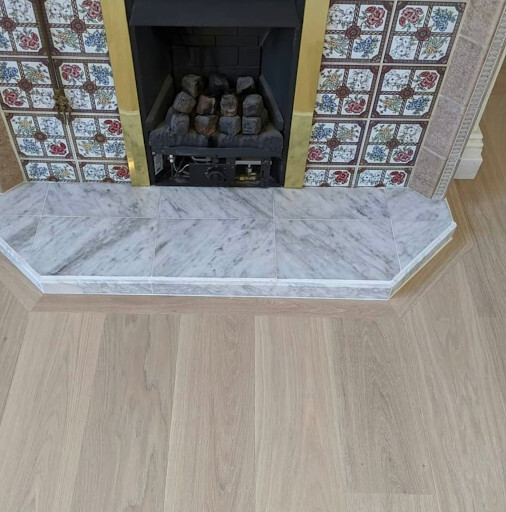
What Flooring Is Best for a Victorian House?
Original or reclaimed timber floorboards and traditional parquet are among the best wood flooring choices for Victorian homes. Where original floorboards survive, repairing and refinishing them can retain authentic character. Engineered wood can provide an alternative where new flooring is needed and greater dimensional stability is beneficial.
Victorian houses were built across a long period and for different social groups, so there is no single floor that can be described as correct for every Victorian property.
Timber floorboards were widely used, with pine commonly found in many houses. In more decorative areas, particularly higher-status reception rooms, parquet could introduce additional detail and geometric interest.
Hallways were also commonly associated with decorative geometric and encaustic tiled floors. Rich colours such as terracotta and deep blues, intricate patterns and layered borders are strongly associated with Victorian designs.
For homeowners concentrating specifically on wood, however, the first question should often be whether usable original floorboards are already present.
Should You Restore Original Floorboards in a Period Property?
Original floorboards should generally be assessed for repair and restoration before replacement is considered. If the boards remain structurally suitable, professional repairs, sanding and refinishing can retain the authentic timber while improving the appearance and usability of the finished floor.
Old boards inevitably develop signs of age. Small imperfections, previous repairs and colour variation do not automatically mean the flooring needs to be removed. In many period homes, those details contribute to the character of the room.
Professional wood floor restoration can address worn surfaces and repairable damage while retaining as much existing timber as practical.
Loose boards should be secured before the surface is refinished, and the condition of the joists and subfloor should be considered where movement or unevenness is present.
Older properties can also present issues that are not immediately visible from the surface. Dampness, draughts, uneven boards and historic alterations may all affect the best approach.
This is why stripping out old flooring simply because it looks tired can be premature. A worn floor may look noticeably lighter, cleaner and more consistent after professional floor sanding, while still retaining the marks and grain that give old timber its character.
What Flooring Suits an Edwardian Home?
Edwardian homes suit natural timber floorboards, parquet and carefully selected engineered wood particularly well. Compared with many Victorian interiors, Edwardian design often favoured a somewhat lighter and simpler appearance, so warm natural wood, cleaner parquet layouts and less visually heavy finishes can complement the period effectively.
Edwardian homes often have a greater sense of light and space than earlier Victorian properties, making natural timber an attractive way to reinforce that character.
Where an original Edwardian floor remains, restoration can preserve the existing boards rather than introducing materials that look disconnected from the rest of the building.
For a new floor, oak provides a practical balance between durability, warmth and traditional appearance. The colour and finish can then be adjusted to suit the house rather than forcing the property into a particular style.
Edwardian tiled floors are another recognisable feature, especially around entrance halls and paths. Edwardian tiles are commonly associated with somewhat lighter colours, including creams, pale greys and pastels, as well as cleaner geometric patterns and shapes such as squares and octagons.
Wood does not need to imitate those tiled areas. Instead, timber flooring in adjoining living rooms and reception rooms can complement them by introducing warmth and a simpler natural surface.
Is Parquet Flooring Suitable for Victorian and Edwardian Homes?
Yes. Parquet can be highly appropriate for Victorian and Edwardian homes, particularly in reception rooms, living rooms and dining rooms. Its geometric patterns introduce detail that complements period architecture while still functioning effectively in modern interiors.
Parquet became associated with more decorative and higher-status interior spaces during the Victorian and Edwardian periods. Today, it remains a popular choice for homeowners who want a new floor with a strong connection to traditional design.
Herringbone is particularly versatile because its repeating layout provides visual interest without overwhelming other architectural details.
The size, colour and finish of the parquet all influence whether it feels traditional or contemporary. Darker stained wood can create a richer appearance, while natural oak can make the same pattern feel noticeably lighter and more modern.
Existing parquet should also be assessed before replacement. Loose blocks and worn finishes do not necessarily mean the entire floor has reached the end of its life. Professional floor restoration can potentially repair suitable sections before the surface is sanded and refinished.
Is Engineered Wood Suitable for a Period Home?
Engineered wood can be an excellent choice for a period home when new flooring is required. Its layered construction provides greater dimensional stability than solid timber, while its real wood surface allows homeowners to retain the appearance, grain and warmth associated with natural wood.
An old house does not have to use only old materials.
Period homes have been adapted repeatedly over decades, and today’s homeowners often need flooring to work alongside modern heating, altered room layouts and contemporary expectations for easy maintenance.
Engineered wood flooring provides a real timber surface while offering greater stability where changes in temperature and moisture could affect solid boards.
The key is choosing a product that suits the building.
An engineered oak floor with an appropriate grade, plank width and natural finish can sit comfortably alongside original fireplaces, cornicing and joinery. A product with an overly artificial colour or texture may feel less sympathetic.
The aim should be to complement the period property rather than create a reproduction that pretends to be original.
Should You Choose Narrow or Wide Floorboards?
Narrower boards often complement Victorian and Edwardian properties because their proportions can feel closer to traditional floorboards, while wider planks create a cleaner and more contemporary appearance. The best width depends on the age of the property, room dimensions and whether historical character or a modern contrast is the priority.
Many Victorian and Edwardian homes contain relatively narrow pine floorboards. Preserving those boards where possible helps retain the original proportions of the room.
However, wider planks are not automatically unsuitable for period homes.
A large Edwardian reception room, for example, can accommodate wider engineered oak boards while still feeling balanced. Wider planks can also create a calmer surface because there are fewer lines across the floor.
Homeowners renovating a Georgian townhouse may encounter different proportions again, including historically wider boards in some properties.
Rather than selecting a plank because it is marketed as “period”, consider the actual building, existing boards and scale of the room.
Which Flooring Works Best in Different Rooms?
The best flooring depends on how each room is used. Restored timber and parquet can work beautifully in reception rooms, living rooms and bedrooms, while kitchens, bathrooms and other areas exposed to moisture require additional consideration before a wood floor is specified.
In a hallway, durability matters because this is one of the highest traffic areas in the house. Original geometric tiled floors are characteristic of many Victorian and Edwardian entrances, so retaining suitable original tiles may be more appropriate than covering them with new wood.
Living rooms and dining rooms offer more flexibility. Restored floorboards, parquet and engineered wood can all work effectively depending on the age and style of the property.
Bedrooms experience lighter traffic, allowing appearance and warmth to play a larger role in the decision. Natural timber can create a warm surface visually, while rugs can introduce additional softness without hiding the complete floor beneath carpets.
Kitchens and bathrooms need more careful planning because wood reacts to moisture. Engineered flooring may offer greater stability than solid boards in some environments, but suitability still depends on the individual room, installation and expected moisture exposure.
The function of the space should therefore guide the material rather than applying one flooring choice throughout the house without consideration.
What Should Be Checked Before Installing New Flooring in an Older House?
Before new flooring is installed in a Victorian or Edwardian home, the existing floor structure, subfloor condition, level and moisture should be checked. Loose boards, movement and uneven surfaces need to be addressed first so the new finished floor has a stable foundation.
Period properties can have very different floor structures from modern buildings.
Some rooms may have suspended timber floors supported by joists, while later alterations may have introduced different materials elsewhere in the property. Decades of repairs can also leave variations in height and surface condition between rooms.
Loose boards should be secured appropriately before another surface is installed. Moisture also needs investigating rather than simply covering the affected area.
Where the chosen installation method requires it, a proper underlay can help with acoustics and provide part of the flooring system, but underlay should not be treated as a solution for significant structural movement, dampness or an unsuitable subfloor.
A professional assessment before installation can identify these issues and establish the preparation required for the new flooring.
Should Period Flooring Look Perfect?
Not necessarily. One of the strengths of original and reclaimed wood is the variation created by age, grain, previous use and natural colour. Restoring a period floor should improve its condition and protection without automatically removing every feature that gives the timber its character.
Perfectly uniform boards can sometimes look out of place beside original architectural features.
Old pine floorboards may contain natural colour differences, historic fixing points and subtle marks accumulated over decades. Parquet may similarly display variation between individual blocks.
Professional sanding should create a usable, consistent surface, but the objective does not have to be making a century-old floor look newly manufactured.
Where new flooring is being installed, timber grades with visible grain and natural variation can reproduce some of that warmth without pretending to be an original floor.
This balance between preservation and practicality is often what allows flooring to sit naturally within a period property.
Can Modern Wood Flooring Work with Traditional Interiors?
Yes. Modern wood flooring can complement traditional interiors when its colour, proportions, grain and finish respond to the architecture around it. Engineered oak, wider planks and contemporary finishes can provide a deliberate contrast without erasing the character of a Victorian or Edwardian house.
Renovating a period home does not mean recreating every element exactly as it appeared more than a century ago.
Many homeowners want to preserve fireplaces, mouldings, doors and other original details while creating brighter, simpler living spaces. Natural wood is incredibly adaptable in this context.
A light oak floor can make an Edwardian room feel brighter without competing with decorative details. Herringbone parquet can introduce a traditional pattern, while a pale finish makes it feel contemporary. Darker stained boards can create a stronger historical feel in formal reception rooms.
The right flooring should connect old and new elements rather than making them compete.
How Do You Maintain Wood Flooring in a Period Home?
Wood flooring in a period home benefits from regular gentle cleaning and maintenance suited to its finish. Dirt and grit should be removed before they scratch the surface, while excessive water should be avoided. Oiled and lacquered floors also have different long-term maintenance requirements.
Regular vacuuming or sweeping prevents abrasive dirt from building up, particularly around entrances and other high-traffic areas.
Occasional cleaning with an appropriate wood-floor product can then maintain the surface without saturating the timber.
Over time, some floors can be refreshed without complete sanding. Depending on their condition and finish, professional wood floor maintenance may involve cleaning, light surface preparation, re-oiling or recoating.
Addressing wear before the protective surface completely fails can help preserve the timber and reduce the need for more extensive restoration later.
Choosing Flooring for a Victorian or Edwardian Home in London
Renovating a period property requires more than selecting flooring because it looks traditional. The existing materials, age of the house, room function and condition of the floor structure should all influence the decision.
HS Wood Flooring works with wood flooring installation, floor sanding, wood floor restoration and engineered wood flooring across London.
Where original floorboards or parquet can be retained, restoration may preserve more of the building’s character than replacement. Where new flooring is the right choice, timber species, board dimensions, pattern and finish can be selected to complement the property while providing the durability expected from a modern floor.
If you are renovating a Victorian terrace, Edwardian semi or another period home and are unsure whether to restore existing boards or install a new wood floor, contact HS Wood Flooring to discuss the flooring and condition of your property.
Final Thoughts
The best flooring for Victorian and Edwardian homes is flooring that respects the individual property rather than relying on a single idea of what a “period floor” should look like.
Original pine floorboards and parquet can be worth preserving where their condition allows. Engineered wood provides a practical alternative when new flooring is required, while the right plank width, colour and finish can help new timber sit naturally alongside original features.
Most importantly, inspect what is already there before covering or removing it. A floor that initially appears worn may simply need repairs, sanding and refinishing to reveal the character that has been part of the house for decades.